
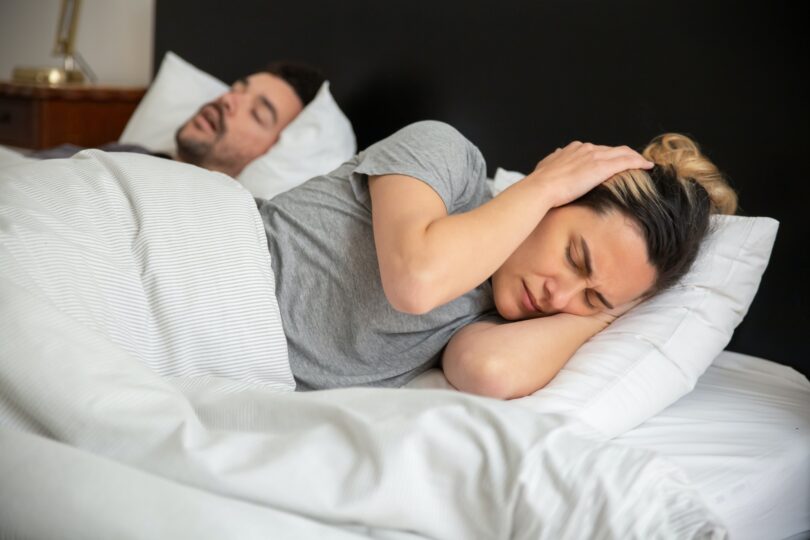
Around ten percent of the population suffer from non-restorative sleep – a snoring volume of up to 85 decibels is not uncommon.
From an almost meditative rattle to the volume of a jackhammer – snoring is not only annoying for everyone within earshot but can also be dangerous for the snorer. Dropouts affect the heart and circulation, and those affected are often exhausted during the day, even though they have slept enough.
“Snoring is a breathing noise that occurs in the upper airways during sleep. If the airflow between the tip of the nose and the larynx is not ideal, the affected soft tissues vibrate and you snore,” explains snoring expert Andreas Temmel, a specialist in ENT -Healing. Incidentally, the Guinness Book of Records records a sleep volume of 93 decibels. This roughly corresponds to the background noise of a busy motorway.
ADVERTISEMENT
»The transition from harmless snoring to sleep apnea is usually fluid.«
The reasons for this phenomenon are numerous. Starting with an age-related weakening of the nostrils, a so-called wing insufficiency, through a crooked nasal septum or a sagging soft palate, snoring can have many different causes. It is also possible that the base of the tongue also increases in the event of general weight gain, thereby narrowing the breathing space in the throat. Excessive consumption of alcohol also causes the muscles of the tongue and palate to collapse more easily.
Snoring itself can be divided into two major types. The harmless form of snoring, which affects almost every second person in the course of life, is only a social problem and is not harmful to health or a concern. These snorers just make noise.
Snoring is not a trifle
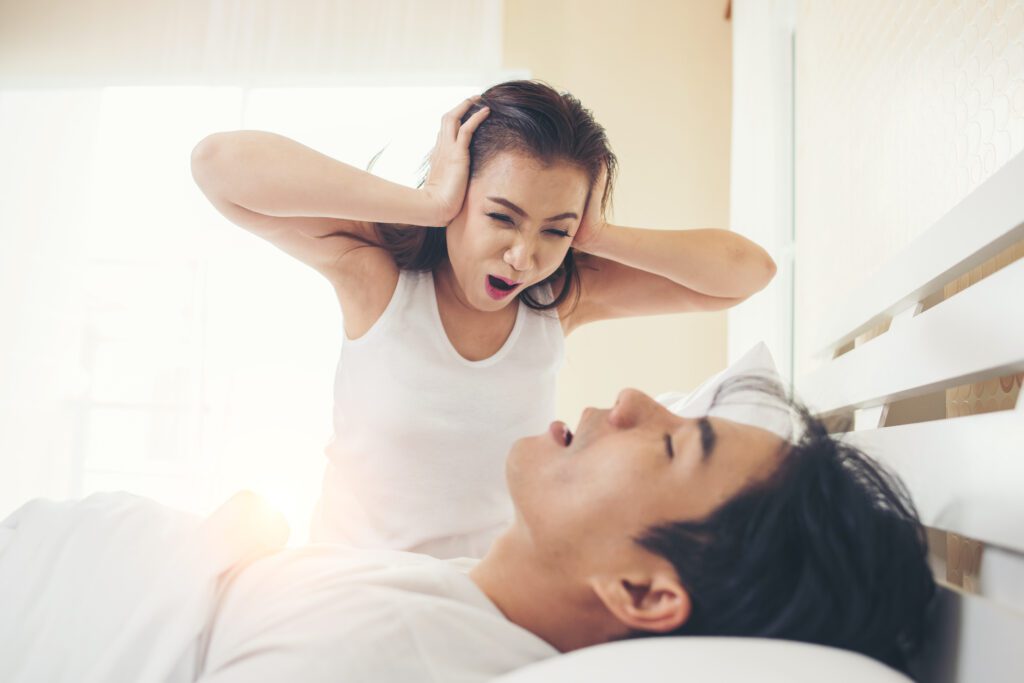
The second form of snoring, obstructive snoring, is significantly more dangerous and should be treated quickly in any case, as the specialist knows: “In the case of obstructive snoring, the oxygen saturation can drop during sleep due to long breathing pauses and thus cause long-term damage. Such sleep apnea damages the cardiovascular system.” Apnea comes from Greek and means calm. If you stop breathing for 10 seconds, you have apnea. “But people with extreme apnea cannot breathe for 60 seconds or more, which reduces the oxygen saturation in the blood, the organs are supplied with less oxygen and the possible complications of sleep apnea occur,” explains Temmel.
A correct diagnosis is therefore essential: “Without having clarified the cause of snoring by means of an examination, it is dubious to give tips against snoring. The causes can be so varied that the patient should always consult a doctor,” says the snoring expert.
An operation can help
If there is an anatomical cause that cannot be treated conservatively, an operation is recommended: “The desire for therapy for harmless snoring must come from the patient; in the case of obstructive sleep apnea, the doctor must explain to the patient the need for therapy to avoid the negative consequences explain,” summarizes Temmel. Continuous snoring is mostly harmless. However, a sudden, unmediated grunt from the patient is a warning symptom of breathing pauses during sleep. The transition from harmless snoring to sleep apnea is usually fluid. Then at the latest, it is time to see a doctor to get to the bottom of the causes.
If snoring is only a social problem, you can try the following therapy options:
Helpful tips against annoying snoring
1 – Do not drink caffeinated beverages (coffee, black tea, cola) after lunch.
2 – Avoid alcohol as much as possible and never use it as a “nightcap”.
3 – Sleeping pills or sedatives have a similar effect, as they also relax the muscles of the tongue and uvula and make snoring louder.
4- Overall weight loss can also cause snoring to go away naturally.
5 – Smoking also significantly increases the risk of snoring.
6- Singing strengthens the muscles involved. Wind instruments such as the trumpet or trombone also strengthen the throat, palate and tongue muscles.
7 – Humidifiers protect the mucous membranes from dryness; a cool bedroom or elevating your upper body can also help.
8 – No heavy meals in the evening.
For some snorers, the cause can be remedied very simply:
9- They lie on their back.
There are special pillows that prevent you from sleeping on your back.
Read Also ==> : Do you wake up in the middle of the night? What about your emotional state at the time of sleep loss?