

Recognizing the symptoms of premenopause is important to know what is happening to our bodies. The decade preceding the actual menopause is studded with a series of signals caused mainly by the hormonal changes taking place; weight gain, mood swings, and irregular cycles are just some of the early symptoms. Let’s find them all.
ARE THERE INITIAL PREMENOPAUSE SYMPTOMS THAT “ANNOUNCE” IT? AT WHAT AGE DOES PREMENOPAUSE ARRIVE?
- The term premenopause or perimenopause refers to the period that precedes the actual menopause.
- It is not easy for all to recognize the initial symptoms of premenopause: these generally include altered menstruation that becomes irregular, mood swings, decreased desire, but not only.
- There is no precise age for premenopause: generally around 40-45 years the first symptoms begin to be felt, but they can even precede the actual start of menopause by up to ten years.
- Getting pregnant in premenopause is not impossible, although the chances of pregnancy decrease due to a number of factors, including altered hormone levels.
- Are nocturnal hot flashes and premenopause linked? Surely there could be a connection between the two; when this period of a woman’s life begins, sleep disturbances also begin to become more frequent.
Feared by almost all women, premenopause precedes the actual menopause by up to ten years; hormonal changes, irregular cycle, weight gain, and mood swings are just some of the disorders of premenopause, initial symptoms that indicate that we are entering this new period of our life. Although there is no age for perimenopause, the first signs usually make their way after the age of 40. In some cases, premenopause may occur several years earlier.
Girls, if you are interested in this topic, follow us in the post where we will find out everything there is to know about premenopause, the initial symptoms to notice, and the possibility of becoming pregnant.
ADVERTISEMENT
WHAT IS PREMENOPAUSE IN DETAIL AND AT WHAT AGE DOES IT START?
As we have mentioned, by premenopause or perimenopause we mean that period of time that precedes the start of the actual menopause.
In this period of time, we witness the appearance of some initial symptoms of menopause, such as an irregular menstrual cycle or mood swings and weight gain.
There is no ‘ age of premenopause the same for all women: generally speaking, perimenopause is around 40 years of life.
Usually, this age is indicated as the “watershed” between the moment of fertility and that of infertility of the woman; in fact, after the age of 40, it has been noted that the quality of the oocytes worsens, making it difficult (not impossible, as we will see) to establish a premenopausal pregnancy.
Facing premenopause with determination and vivacity, however, is essential to living better even in the following period of menopause.
PREGNANCY AND PREMENOPAUSE, AN IMPOSSIBLE COMBINATION?
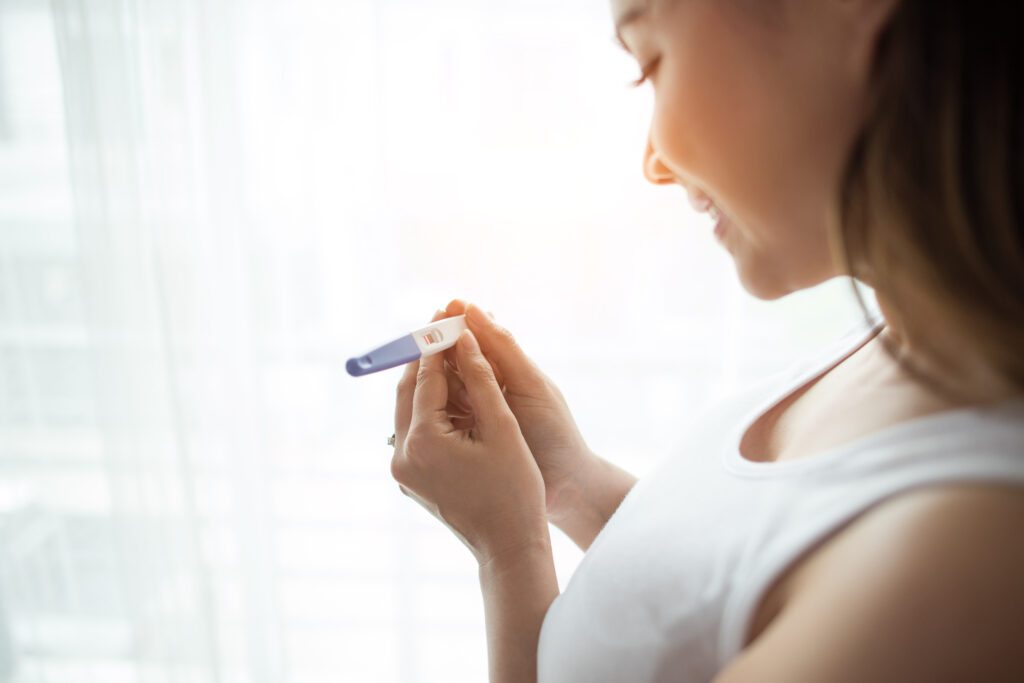
The age of the pregnancy, in recent years, has been growing more and more. It can therefore happen to worry and think that premenopause and pregnancy are incompatible conditions.
In fact, that’s not quite the case. When women are premenopausal, estrogen levels drop dramatically and cause irregular menstruation and ovulation.
It is certainly more difficult to get pregnant during this period, but not impossible. Among other things, the symptoms of premenopause and pregnancy can often be confused with each other.
We are talking above all about the absence of menstruation, which in perimenopause is not punctual and precise as before. Irritability and swelling can also be symptoms of both conditions.
Ultimately, if you do not want to become pregnant, even if you are premenopausal, the use of a contraceptive is recommended.
Girls, stay with us: see you on the next page to find out in detail all the symptoms of premenopause to keep under control if you think you are approaching this phase of your life.
SYMPTOMS OF PREMENOPAUSE TO LOOK FOR: THE COMPLETE LIST, FROM THE IRREGULAR CYCLE TO MOOD
As mentioned earlier, what it is important to pay attention to understand if you have entered premenopause or perimenopause, is the set of symptoms that accompany this phase of a woman’s life.
You don’t always notice that you have entered the pre-menopausal period until the initial symptoms of premenopause appear. Below we will list the main ones with a brief explanation that does not want to replace the opinion of a doctor.
We remind you, as always, that the only person who can diagnose premenopause is a specialist so trust your doctor if you think you have entered perimenopause.
ALTERATIONS OF THE MENSTRUAL CYCLE, ONE OF THE FIRST SIGNALS OF PERIMENOPAUSE

The first symptom that strikes the eye initially is the irregularity of the menstrual cycle. This condition can also be accompanied by other female pathologies, therefore it is not always linked to premenopause.
The reason why we see alterations in the menstrual cycle is soon said: when we approach menopause, estrogen levels drop drastically.
These hormonal changes result in irregular menstruation and ovulation. As a result, we may have very short or long menstrual cycles, with possible amenorrhea. However, this should not immediately scare us: menopause is generally diagnosed after 12 months of absence of menstruation.
FREQUENT MOOD SWINGS COULD INDICATE PREMENOPAUSE
It is not certain that all women experience this symptom of premenopause, especially at the beginning; it can happen, however, to have sudden mood swings several times during the day due to the hormonal changes taking place, especially due to the decrease in progesterone.
Difficulty with memory can also indicate that you are approaching premenopause.
PREMENSTRUAL SYNDROME WORSE THAN BEFORE
As you approach premenopause, you may experience stronger symptoms of PMS.
In addition to mood swings, these also include headaches, difficulty concentrating, sleep disturbances, abdominal pain, breast tenderness, and fatigue.
As always, a healthy lifestyle with a balanced diet is recommended.